Exploration of an Environmental Issue
In this essay I am going to focus on mineral oil (and shale gas) as environmental issue and the different roles and effects of mineral oil upon humans and nature. Mineral oil is also known as liquid petroleum and hydraulic oil.
(Dadachanji, D on eHow 2011)
Mineral oil is transparent, with no direct or defined colour. The oily liquid is obtained by the cleansing, distillation and refinement processes of crude oil (petroleum). Mineral oil is produced in large amounts and is relatively not expensive for first stage buyers, but it gets more expensive for final users and buyers. There are different types of mineral oil. Every type of mineral oil are created and composed of hydrocarbons. Mineral oil can be found as an ingredient in various substances and aptitudes such as cosmetics; cream and gel, lubricant and grease forces and wood and metal preservatives. The main use of mineral oil world wide is to produce gasoline.
(Dadachanji, D on eHow 2011)
Mineral oil is not directly toxic for humans if small amounts are swallowed, but more large amounts can lead to the cause of vomiting, diarrhea, nausea and abdominal cramping. The fumes of mineral oil can cause irritation to human and animal eyes and too much breathing of the fumes can cause chemical pneumonia. People that work with mineral oil and have direct contact with the oil are likely to obtain skin irritation. Skin irritation can lead to skin inflammation; dermatitis.
(Dadachanji, D on eHow 2011)
On the website Blurt It.com it is argued that oil has always been on earth, since the beginning. The first humans to use it effectively, according to Blurt It, were the Greeks as they were the first humans to use it against their enemies by burning their ships down, as it is flammable. There is no exact evidence when the first oil was found as it was already used approximately 200 million years ago by humans.
(Blurt It n.d.)
The first modern commercial oil well produced ninety percent of the world’s oil in 1861. In 1848 Russian engineer, F.N. Semyenov, drilled and searched for oil on the Aspheron Peninsula northeast of Baku, Asia. Semyenov was the brain behind the first stages of producing modern commercial oil that are still being used, in various forms and substances, for petroleum and other fuels to run the performance of machine engines.
(Gee, B on eHow 2011)
Oil is off crucial part in the world today in essence that it makes air-plains, vehicles etc. run properly. Aero plains and vehicles, for example, are crucial in various ways of how the world developed and are going to develop over the following years. Immediate transport cause activities to run faster and so the world gets faster developed, for example, materials get manufactured and transported quicker. Oil plays only a little role in the developing stages and cycles, as most argue that technology plays the biggest role in causing the world with its countries to develop. According to Samantha Ohler on Ask.co, the first oil was discovered by F.N. Semyenov, a Russian engineer, in 1848.
(Ohler, S on Ask 2011)
Global thoughts surrounding the issue
In recent years societies became increasingly aware that there are more to life than just goods and services, which are commonly known as material goods. Humans derive pleasure from breathing fresh air, drinking pure water and to be in touch with the beauties of nature and animals. This can be summed up in the well-known expression, “Some of the best things in life are for free.” These organic sources and beautiful elements of life and nature are sometimes sacrificed and taken for granted by several human species. Humans on earth appreciate progressively more the importance of the environment.
(Bernard L. Cohen on Phyast n.d.)
The burning of fossil fuels, which includes oil, has become a main participant in harming the environment. This is caused by a variety of human activities. The activities include mass production of products and services, the increasingly expansion of multi-national corporations and globalization. The scientific problem is that when oil (also coal and gas) gets burned, it produces carbon dioxide that contributes to the atmospheres’ carbon dioxide, with which the atmosphere gets over supplied with and that result to the increase of the greenhouse effect and thereby the Earth’s temperature rises. The effect of the earth’s temperature that rise cause climate change, as we experience it more and more over approximately the last 25 years. The release of acid gasses (carbon dioxide, sulfur dioxide and nitrogen oxides) by business’ plants and factories, for example an electricity plant like Koeberg power station, cause air pollution which result into the greenhouse effect. The gasses, that pollute the air, get carried away by wind and then dissolve in rain water when it rains – this is known as acid rain. Acid rain kills animals in the sea, for example, fish and it is destroying forests. The air pollution, which forms the second stage in the developing of acid rain, kills thousands of people and makes millions ill every year. It becomes more apparent that we as humans are destroying our own environment and put our own environmental burdens upon ourselves.
(Bernard L. Cohen on Phyast n.d.)
(Freudenrich, C, Stricland, J on How Stuff Works 2011)
The preparation of the drilling process is to clear the land and to build access roads to the drill spot. Water is used in the drilling process, so there must be a water source nearby or water should be transported by using the access roads. A reserve pit must then be created to fill up with disposable rock cuttings and mud during the drilling process. The reserve pit gets lined with plastic to protect the environment. The disposable rock cuttings and mud must be transported away and the area should be cleaned up and holes are being dig for the oil rig to be placed at the main hole. The workers also begin to drill the main hole. This process may also cause hydraulic fracturing.
(Freudenrich, C, Stricland, J on How Stuff Works 2011)
(2space, 2011)
Hydraulic Fracturing appears when actual rocks get fractured, caused by fluid that is pumped down through a drill channel at an extremely high force, also known as a well, against the rocks that contain the shale gas. The drill goes up to five kilometers vertical underground to where the shale gas are and then up to 12 kilometers vertical. The rocks get fractured due to the extreme force. This cause the rocks to crack and eventually split open that cause the gas to escape. The fracturing fluid contains water mixed with sand and a lot of different chemicals. The chemicals are highly toxic and very dangerous to humans and the environment.
(Greenpeace 2010) (50/50 Humans and Nature, 2011)
The rock splinters and fracturing of one single well requires a massive capacity of water; an average of between 9 and 29 million liters of water. The toxic chemicals in the fracturing fluid make up for about two percent. In order to apply the two percent, a single well will contain an average of 180 000 – 580 000 liters. The big problem is that only 15 – 80% of the fluid pumped down is recovered out of the hole. The rest of the fluid stay behind underground, where it is a source of dirt and cause pollution to water aquifers. The pure water resources of that specific underground area hardly recover.
(Greenpeace 2010)
Oil spillage is another issue involving oil usage and damage to the environment. Oil spills are most likely to appear from oil transportation tankers that leak oil directly into the ocean. Improper and the neglecting of tanker maintenance are the cause for the tanker to leak. It also happened in the past that when countries declare war, some forces drop gallons of oil in the ocean at the enemy’s country. People also illegally dump crude oil into the ocean, because they are not willing to pay money to decompose their waste oil.
(Think Quest 2002)
The oil spills have a severely negative effect on sea animals. Sea birds get killed when the oil gets stuck onto their feathers. The oil gets very heavy on the wings of the bird, so they try to clean themselves by eating the oil off and then get poisoned. Whales, as another example, gets very quickly effected from oil spillage, especially killer whales. Oil spillage is one of the reasons why killer whales have become endangered, because the oil enters the blowholes of whales that help them to breathe. There are plenty more sea animals that get effected by oil spillages. All other animals that eat the dead and poisoned animals get very sick or die from the poison. There are oil rehabilitation reserves and services for sea animals covered in oil. In Betty’s Bay there is a penguin reserve that also rehabilitates penguins that suffered from oil spillages.
(Think Quest 2002)
(Thinkqeust, 2002)
The clean up process is very long and requires a lot of help from other corporations, sea emergency services or even other countries’ help. The Exxon Valdez oil spill happened March 23, 1989 near Alaska. Approximately 2 800 sea otters and 250 000 sea birds died. It took the Exxon Valdez company four seasons to clean their spillage and it required help from more or less 10 000 workers, 1000 boats, 100 airplanes, the Navy, Army and Air force to help with the clean up process. The process cost the company $2.1 billion.
(Think Quest 2002)
Since 1967 there have been 26 major oil spills globally that had severe and brutal effects on the environment.
(Info Please 2011)
Air pollution is also a vital consequence and effect of oil, but I am not going to elaborate on that as I am going to focus on the oil-drilling on land and Hydraulic Fracturing as environmental issue that are directly linked to oil and the discovering to the ultimate possession of oil.
Ad/media campeign
(Stopfracking, 2011)
The “Frack off Shell” campaign that illustrates the anti-fracking movement was launched early in March 2011. Defenders and residents of the Karoo took action by standing at numerous Shell petrol stations in the Western Cape, Northern Cape and Eastern Cape. The people stand with carton papers at the entrance of the Shell garages asking people not to support Shell and to boycott the petroleum company as they attempt to invade the Karoo and will destroy the natural resources, as pure and fresh water, with their activities.
A range of t-shirts have being produced, supporting the anti-fracking campaign. The t-shirts contain Shell’s logo, but the actual shell is manipulated so that the middle part, which looks like a finger, stands out. It displays a ‘middle-finger’ in the company’s logo and different statements as the following examples:
· Stop fracking in the Karoo! Don’t fill up at shell.
· Don’t frack with our Karoo!
· Frack you, Shell. Keep your hands off our Karoo.
· Get your fracking hands of our Karoo!
The t-shirts can be bought online from the website www.stopfracking.co.za. The t-shirts, both male and female, cost R150 and all the sales and contributions go towards website maintenance and research involving the fracking issue.
(Stop fracking 2011)
Local case study
South Africa is currently facing an energy crisis and shale gas is proven to be the solution, but hydraulic fracturing technology used to free oil and shale gas has stern health and pollution effects.
(50/50 Humans and Nature, 2011)
Shell applied to explore a total of 90 000 square kilometers in the Karoo in search of shale gas and shale oil. Shell has to propose an Environmental Management Plan (EMP). The EMP is currently in draft form where it receives strong opposition from the public, especially the Karoo participation public. The questions that were asked are around issues such as how many jobs will be created and how many will be lost? How will the noise, pollution and heavy machinery disturb the calmness, harmony and tranquility of the Karoo? The most important question of all is that how will it affect the Karoo’s scarce freshwater resources? There are chances that rivers and boreholes will be filled with methane gas, which are highly flammable and is used as a fuel formula; CH4.
(50/50 Humans and Nature, 2011)
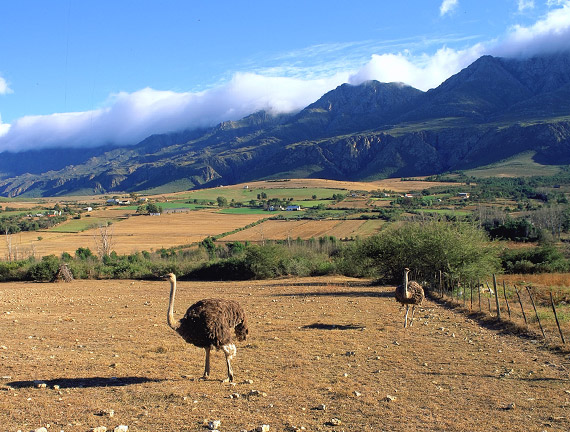
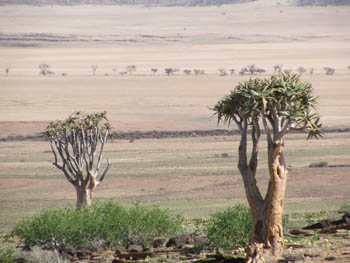
The Karoo is characterised by the semi-dry heartland of South Africa. The wide open fields and mountain ranges are lightly covered with plants such as the Karoo bush, Nama Karoo Veld and a variety of succulents with sporadic grasslands and 40% of these plants occur in the Karoo. The landscape is exceptional and unique as it serves as inspiration for artists and poets. It is also an ancient land in which fossils provided evidence on pre-historic eras. Scarce animals occur from a vulnerable existence, for example, the mountain zebra and the blue crane. These animals are rare and all other animals included are dependent on the irregular rainfall, broken rivers other foundations of surface water. Agriculture is practiced mainly and very widespread over the Karoo. Roughly 60% of the world’s mohair, the soft silky wool of Angora goats, comes from the Karoo. The landscapes turn green when the irregular rain comes and turn the Karoo in an exceptional visual beauty. The farming activities in the large area are extremely dependent on the underground water aquifers (Life blood for agriculture) and if it should get polluted this unspoiled world will disappear forever. The exploitation process for the natural gas could possibly destroy the beautiful and unique landscapes of the Karoo.
(50/50 Humans and Nature, 2011)
(African bird club, 2008)
(Telegrapk, 2011)
(Gane and Marshall, 2011)
(Farm3, 2011)
Shale gas was discovered for the first time in a central part sampler during a search in 1969 for oil by the company Soekor. The findings from that time were that the gas was trapped in the ecca shale in the Karoo and it was too expensive to extract. The technology hydraulic fracturing was introduced in the late 1940’s by a prospector from Texas. The technology was only used the first time in 1990 in the USA. It became affordable for oil companies to drill more frequently when the oil price rose harshly.
(50/50 Humans and Nature, 2011)
Shell applied for prospecting rights with PASA, the Petroleum Agency of South Africa. Shell wants a decision on exploration rights as they applied December 14, 2010 and is waiting for a decision by PASA. They expect a decision on prospecting rights this year on or before August 12. Shell will start to drill in 2012 if everything works out for them and Hydraulic fracturing will start in 2013 if everything goes according to plan for the company. Shell intends to install 24 exploration wells, so far, over the whole Karoo region. Hydraulic fracturing has a bad reputation associated with a lot of life-threatening side-effects and of pollution of air, soil, surface and underground water. Karoo communities showed enormous action towards resistance against Shell’s possible prospecting process.
(50/50 Humans and Nature, 2011) (Defence Web 2011)
The majority of the Karoo residents are against Shell’s possible exploitation process, but there are some that welcomes it as well, as they believe it will be the cause of job creation.
(50/50 Humans and Nature, 2011)
Dr. Ahee Coetzee, Geo Pollution Technology, said that if groundwater gets polluted, it is something that will sustain and be there for 30-50 years and the rehabilitation is almost an impossible task. Another definite possibility is that the drilling mud can get in contact with the pure underground water and pollute it.
(50/50 Humans and Nature, 2011)
Tony Cortis from Shell said that pollution to the underground water may primarily happen from incorrect installation of the borehole and not so seriously from hydraulic fracturing. Cortis also argued that if there is pollution in some cases, it will not affect the whole Karoo, but only a restricted and controlled area. Cortis also said that they will control and rehabilitate such incidents.
(50/50 Humans and Nature, 2011)
Prof. Maarten de Wit, Geology and Mineralogy at the University of Cape Town, said that has a bad name and a bad record and it might be a risk to trust them.
(50/50 Humans and Nature, 2011)
Douglas Stern, Karoo Farmer, said the hydraulic fracturing process is not conductive to human health. Stern also argued that he is going to take on Shell. Stern said he is not going to leave, there is no plan B, it is already unacceptable to him that this process has been allowed to go so far.
(50/50 Humans and Nature, 2011)
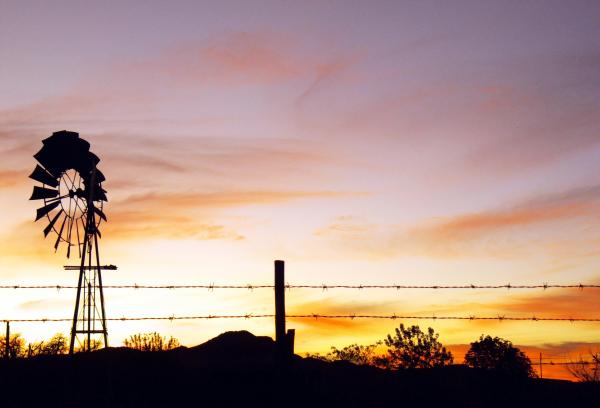
(Michael Drysdale on Finear America, 2011)
Bonang Mohale, Vice President of Shell SA, said it is a wonderful opportunity, especially in an environment where there is concerned about security providers in general. Mohale also said that if they leave their operations, whether it is after a month or 30 years, they will leave it in a better condition that when they found it. Mohale also said that the bringing back of the biodiversity is a crucial way in how Shell operates. There is no evidence that this statement is guaranteed or even possible.
(50/50 Humans and Nature, 2011)
Wayman Kritzinger, Vice President of Agriculture Eastern Cape, said it is going to have an enormous impact on the whole of South Africa, it is a national problem. Kritzinger also stated that water forms a main part of the Karoo and also people and animals in the area. Without water the Karoo will be a lost and ‘ghost’ area and farming will not be able to continue and function properly.
(50/50 Humans and Nature, 2011)
The agriculture community consider and believe that there is not enough water in the Karoo and the little that there is can be polluted by ‘fracking’.
(50/50 Humans and Nature, 2011)
(50/50 Humans and Nature, 2011)
(50/50 Humans and Nature, 2011)
South Africa stands a chance to possibly be selected as the host country for the Square Kilometre Array (SKA) radio telescope, but air pollution and noise from Shell’s activities can risk the opportunity for the country.
(50/50 Humans and Nature, 2011)
This is currently the last opportunity for parties and people to act against and try to stop Shell from a possible destructive process. According to the law, Shell is obligated public interest and affected parties and groups the opportunity to comment on their draft management plan.
(50/50 Humans and Nature, 2011)
(50/50 Humans and Nature, 2011)
Derek Light, lawyer of industrialist Johan Rupert, said that the Environmental Management Plan (EMP) of Shell is nonsense. There is no value of information by specialist in the EMP. Derek Light handles the case for over 200 appellants against Shell, including Princess Irene from the Netherlands, who owns a game farm in the Karoo.
(50/50 Humans and Nature, 2011)
(50/50 Humans and Nature, 2011)
There are no rules in the new gas industry; it is unregulated. There are no environmental laws that are valid and apply for hydraulic fracturing. The America Environmental Protection Agency is only now busy to study the impact of hydraulic fracturing.
(50/50 Humans and Nature, 2011)
(50/50 Humans and Nature, 2011)
“France doesn’t want it, Germany doesn’t want it and Canada doesn’t want it, so our question is why would we want it?” - Jonathan Deal, chairman of “Treasure the Karoo Action Group”
(50/50 Humans and Nature, 2011)
The process will affect the social environment directly and in consequence humans as well.
The positive aspects for Shell to come and establish drilling processes is that it will create jobs, as South Africa has a vast amount of people that do not have work; the latest unemployment rate obtained in the last quarter of 2010, are 24%, that is over 11 million people unemployed. Shell may also take part in helping South Africa with the current energy problem it is facing. The energy problem has not become to major yet, but it may become a severe problem.
(50/50 Humans and Nature, 2011) (Trading Economics 2010)
The exploration process of Shell is also going to be the cause of job losses. It is not only farmers and farm workers that stand a chance to be jobless, but the self-sustaining villages are also going to be ruined. These people, including formal and informal farmers that farm mainly with sheep, game, goats and ostriches are going to lose their animals, as they possibly would not be able to take it with them. There are also, where water is attainable, small scale grain farming, for example maize, but on very small scale. Tourism also started to make an impact on the Karoo. All these economic resources will be affected. Nature is the main economic resource in the Karoo and it may be placed on risk to be destroyed.
(Real birder, 2004)
The mineral water that is in danger and might to be polluted by hydraulic fracturing are going to have enormous side effects. For example, the primitive communities in the villages will be slowly destroyed, as humans and animals will be affected by the polluted water. Animals will get sick from drinking the water and so the people and other animals that will eat the sick animals unconsciously. Humans will not survive if they have to drink the polluted water. The rivers also will be polluted and most wild animals drink from the rivers. The scarce mountain zebra, for example, may extinct. Fish and frogs will also die, because they get directly involved as rivers, which are their environment, get directly polluted.
(50/50 Humans and Nature, 2011)
The oil exploration process will also lower farmer’s property value. People will hardly want to buy land that has oil drilling rigs and machines on it. It is also noisy and the Karoo’s known fresh air will be polluted.
(50/50 Humans and Nature, 2011)
The whole country will be effected in various forms if Shell makes their way into the Karoo, both negatively and positively as explained above, but so far the negative effects are taking the upper hand and there are still believed that the risk is just too big to let Shell establish their activities in the Karoo.
“They (Shell) are going to mess with the lives of people!” - Wayman Kritzinger, Vice President of Agriculture Eastern Cape.
(50/50 Humans and Nature, 2011)
Perceptions and theories of prescribed texts linked to the issue
In the article, Society, Nature and Enlightenment, one read that we still live in the Age of Enlightenment, also known as the age of reason. Humans, as individuals, want and strive for knowledge and understanding around subjects and issues. If one draw understanding of enlightenment, it is obvious to understand why people in the Karoo want to know why their environmental nature should be transformed and have a possibility of major effects on both humans and animals.
(Dickens, P 2004: Chapter 1)
According to Peter Dickens, nature also acts as a resource for humans. Two icons from the 16th century, Isaac Newton and Francis Bacon, were prophets of modern science and analysed nature to discover some of nature’s principles. The icons’ priority was to figure out nature’s fixed laws. The key is their ‘inductive method’ was that truth was drawn from the world and earth (nature), rather than from reasoning alone. I am going to use the Karoo issue for example. A principle of nature is that humans, animals and plants need to eat, be fed, or receive care – from nature self, in order to stay alive. It is in nature, for example the rain and the sun is both required let the plants grow. This is also an example of how nature is depended upon nature. The reason might differ from individuals and their experiences with nature. Reason is subjective, for example the reason for Lillian might be that the beautiful plants are to compliment the uniqueness of the Karoo, but for Angela it might be to harvest it immediately and go sell it in exchange for money. In both cases the reason is different to the individual. Shell might want to find oil or shale gas in the Karoo to use it for human commodities and in order to achieve profits. Humans make money out of environmental and natures resources and then use that money to consume more commodities that are composed from environmental and economic resources. Insights drawn from the proposed knowledge out of the romantic (romanticism) era that are still relevant are that people saw nature, both human and non-human, as a foundation and source of wonder and modesty. Humans also need to have an aesthetic, holy and spiritual relationship with their environment as well as with themselves. The chapter also states nature should be appreciated for its own qualities and not for its use as material resource for humanity products.
(Dickens, P 2004: Chapter 1)
Dickens also refers to humanity’s control over nature for human’s best interest that was conquered in the 18th century, as the “Modern movement”. Up to this date new technologies, involving a lot of complex buildings and complicated infrastructure to be segregated from the natural world. The Karoo might be classified as the natural world in this context and major cities, for example Durban, as a city equipped and that mainly functions on new technologies, a place of new technology. Humans, especially, like to sometime leave their fast-driven technological life in exchange for the natural world. The Karoo is a popular place for people to come and enjoy a peaceful holiday as the area with its fresh air and its long distant landscapes and highlands are ideal to break away from the city. The Karoo will lose it idealness in that matter of peace and harmony if Shell comes and establish their plants and activities in the area. It will ruin the Karoo’s environment.
(Dickens, P 2004: Chapter 1)
Maw Weber argues that modern individuals are trapped in an ‘iron cage’. The modern individual, according to Weber, does not have moral value or religious meaning. Weber also use the term ‘Disenchantment’ to sum up modern circumstances and conditions. Maw Weber might argue that Shell will make the nature and the visual appreciated look of the Karoo less attractive and so then disenchant it.
(Dickens, P 2004: Chapter 1)
John Berger explains in his article how humans and socials organisations are dependent on animals for food, work, transport and clothing. I think animals are also regarded as security or a safety source as well. In the case of blind people they are also used (dogs) for navigation. In the Karoo the communities are very dependent on their animals, especially their sheep as main economic and food resource, but also on angora goats for economic resource as mohair are obtained from the goats, which are used for wool, and are exported globally. The Karoo will suffer if something happens with their animals, for example, if the sheep’s water gets polluted from hydraulic fracturing, the sheep might get sick or even die, so farmers will experience a loss or village people might experience a food loss. Donkeys are also used, on a very tiny scale, for transport at and between some places in the Karoo.
(Berger, J 1980: 12)
According to Zeitgeist Addendum it is not necessary to burn fossil fuels at all. The documentary states that we have a lot of energy sources available and it is not essential that the environment have to be contaminated and polluted. The documentary also states that alternative energy solutions are pushed by the establishment, such as hydrogen, biomass and even nuclear. It is very dangerous and only serves the profit structure of oil and energy companies. When we look beyond the ‘propaganda’ and solutions of oil and energy companies, there are clean ways to produce energy from Solar-, Wind-, Tidal- and wave energy. America admitted if wind was harvested throughout in only three of their 50 states, it would be able to power the whole of America.
(Zeitgeist Addendum, 2008)
Own Assumptions
I believe Shell will not pollute all fresh water underground, maybe some sections, but will they realise it soon enough to stop it from spreading slowly through underground canals?
I do not think it is worth the gamble on people and animal’s lives to go and drill in the Karoo, in exchange for a few job opportunities and short term profit for mostly foreign countries. The Karoo is also an economic resource for artists, poets and painters. Their work gets done there; they draw inspiration from the Karoo. Shell will make that source of inspiration disappear. I think Shell should definitely consider a human-centered approach and not, as what it looks like, a profit-centered approach.
We all ‘steal’/’take ‘and ‘borrow’ from nature. We, as humans are depended upon nature. The problem, as I obtained it through my experiences with case studies, are that it develop in a problem when we as humans take too much, out of greed, and it becomes extreme. Shell might not take much to a level of extremeness, but the will risk the lives of people and animals. People improve and develop knowledge according to what there is and has already been found. The findings might be established by others or the environment. We should know by now, through evidential and logic findings, what to use and how to use it appropriately. We should build on those findings according to what is best for nature and future generations.
We, as postmodern human beings are very spoilt on the cost of the degradation of our environment’s resources. Mother Nature might had enough and act towards the bossy, selfish and ‘smart’ new Age human been. Have the world not experienced it recently…?
Book sources:
Berger, J. 1980. Why Look at Animals. In: About looking. Vintage Books: New York.
Dickens, P. 2004. Chapter 1. In: Society and Nature: changing our environment, changing ourselves. Cambridge: Polity press.
Film/Documentary source:
Zeitgeist Addendum, 2008. Part III: The Venus Project. [DVD]. Green Moutain Post.
Internet sources:
2 Space [Image] 2011. Retrieved April 24, 2011 from
http://www2.2space.net/images/upl_newsImage/1272273016.jpg
African bird club [Image] 2008. Retrieved April 20, 2008 from
http://www.africanbirdclub.org/countries/grf_global/SouthAfrica-TanquaKaroo.jpg
Bernard L. Cohen on Phyast n.d. Retrieved April 18, 2011 from
http://www.phyast.pitt.edu/~blc/book/chapter3.html
Blurt It n.d. Retrieved April 18, 2011 from
http://www.blurtit.com/q844961.html
Dadachanji,D on eHow 2011. Retrieved April 18, 2011 from
http://www.ehow.com/about_5388073_define-mineral-oil.htm
Defence Web 2011. Shell’s oil exploration plans in Karoo could affect South Africa’s radio telescope bid. Retrieved April 24, 2011 from
Farm3 [Image] 2011. Retrieved April 23, 2011 from
http://farm3.static.flickr.com/2255/2417710355_a2121aed42.jpg
Freudenrich, C, Stricland, J. (2011). How Oil Drilling Works. Retrieved April 18, 2011 from http://science.howstuffworks.com/environmental/energy/oil-drilling3.htm.
Gee, B on eHow 2011. Retrieved April 19, 2011 from
http://www.ehow.com/about_5047572_history-oil-exploration.html
Greenpeace 2010. Retrieved April 20, 2011 from
http://www.greenpeace.org/africa/en/News/news/Say-No-to-Fracking-in-the-Karoo/
Gane and Marshall [Image] 2011. Retrieved April 24, 2011 from http://www.ganeandmarshall.com/images/southafrica_littlekaroo_mainim.jpg
Greenpeace [Image] 2010. Retrieved April 20, 2011 from fromhttp://www.greenpeace.org/africa/en/News/news/Say-No-to-Fracking-in-the-Karoo/
Huisgenoot [Image] 2011. Slxs [Image] 2011. Retrieved April 24, 2011 fromhttp://www.huisgenoot.com/uploads/articles/Karoo.jpg?width=300
Info Please 2011 Retrieved April 19, 2011 from
http://www.infoplease.com/ipa/A0001451.html
Michael Drysdale on Finear America [Image] 2011. Retrieved April 24, 2011 from
http://fineartamerica.com/images-medium/karoo-sunset-michael-drysdale.jpg
Ohler, S on Answers Ask 2011. Retrieved April 19, 2011 from
http://answers.ask.com/Science/Other/where_was_oil_first_discovered
Planet Seed 2011. Retrieved April 18, 2011 from
https://www.planetseed.com/v2/FAQView.cfm?ID=906
Political Affairs [Image] 2010. Retrieved April 24, 2011 from http://www.politicalaffairs.net/assets/Uploads/EarthTalkOilDrillingSinkHoles.jpg
Rainharvest [Image]2011. Retrieved April 20, 2011 from
http://www.rainharvest.co.za/2011/04/05/which-will-be-first-peak-oil-or-peak-water/
Real Birder [Image] 2004. Retrieved April 23, 2011 from
http://www.realbirder.com/NamibiaBirds/Places/TheKaroo.jpg
Slxs [Image] 2011. Retrieved April 24, 2011 fromhttp://www.slxs.co.za/wp-content/uploads/2011/04/KarooFracking.jpg
Stop fracking 2011. Retrieved April 24, 2011 from
http://www.stopfracking.co.za/
Stopfracking [Image] 2011. Retrieved April 24, 2011 from
http://www.stopfracking.co.za/frack-you/
Telegraph [Image] 2011. Retrieved April 20, 2011 from
http://i.telegraph.co.uk/multimedia/archive/01003/karoo-hills_1003472c.jpg
Think Quest 2002. Retrieved April 18, 2011 from
http://library.thinkquest.org/CR0215471/oil_spills.htm
Thinkquest [Image] 2002. Retrieved April 19, 2011 fromhttp://library.thinkquest.org/CR0215471/oil_spill_on_fire.jpg
Trading Economics 2010. South African Unemployment rate. Retrieved April 24, 2011 from
http://www.tradingeconomics.com/south-africa/unemployment-rate
Television Programme source:
50/50 Humans and Nature, 2011, television programme, SABC 2, Auckland Park, Johannesburg, 18 April.